
Software that watches the water.
ALFRED
PMAT’s ALFRED plans the search, flies it, flags what the camera sees, and hands the decision to a person. Built first for finding someone in the water.
Search a Larger Area with Fewer Eyes on the Screen
Project ALFRED (Advanced Location Finding & Recue Drone) is an autonomous search and rescue drone system designed to detect and locate individuals in distress, with a primary focus on man-overboard and drowning scenarios. A person in the water is a few pixels in a sea of glare. ALFRED combines autonomous search patterns, computer vision, and human-in-the-loop decision support so an operator reviews detections more accurately.
Autonomous Search
Generates and flies standard maritime search patterns, adjusted for ocean drift and the target’s predicted position.
Perception
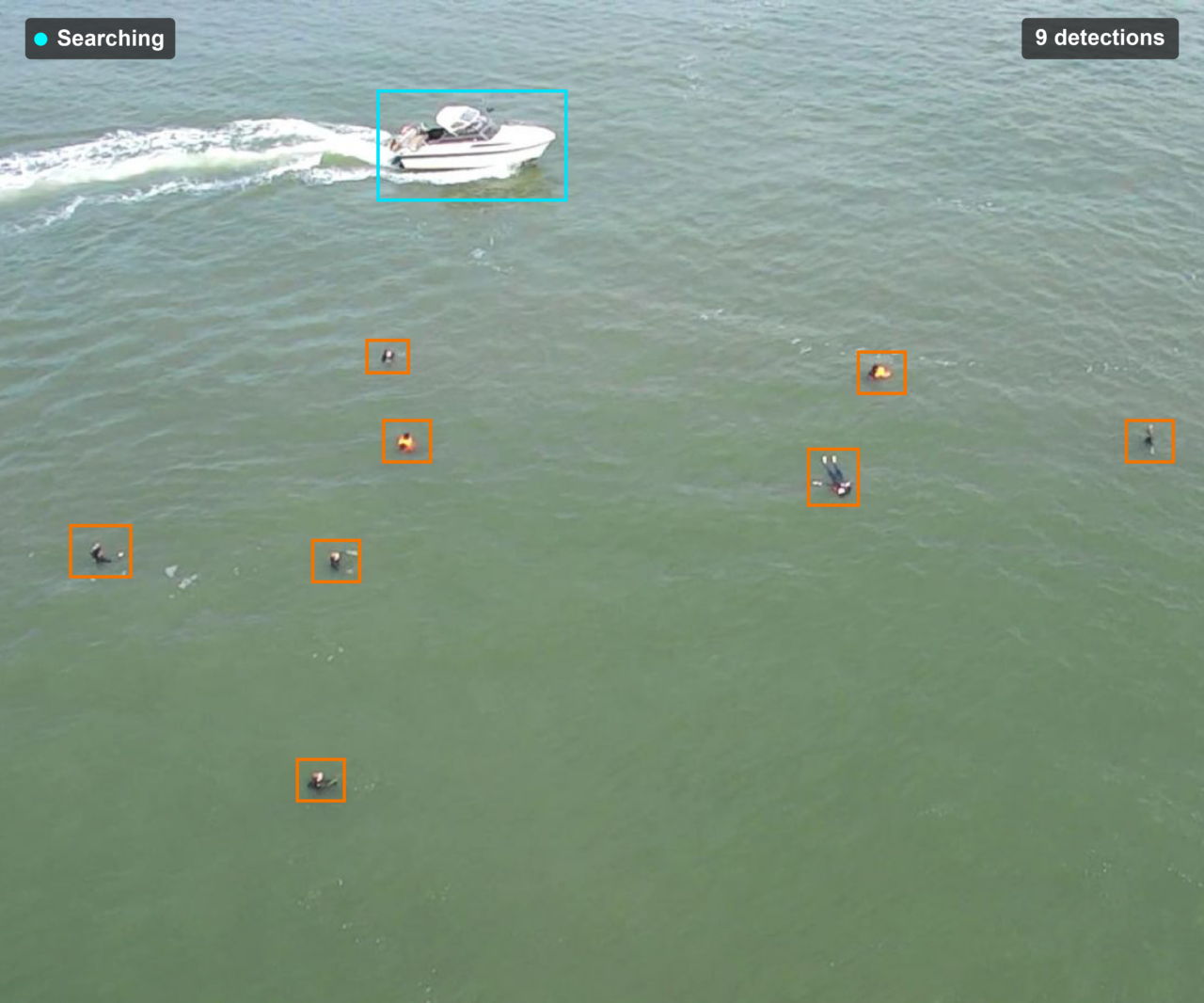
Runs object dection on live imagery and turns it into a short list of media for the operator to review.
Human in the Loop
Every detection goes to the operator. The operator decides whether to keep searching, hold overhead, or end the mission.
1 of 5
Detect
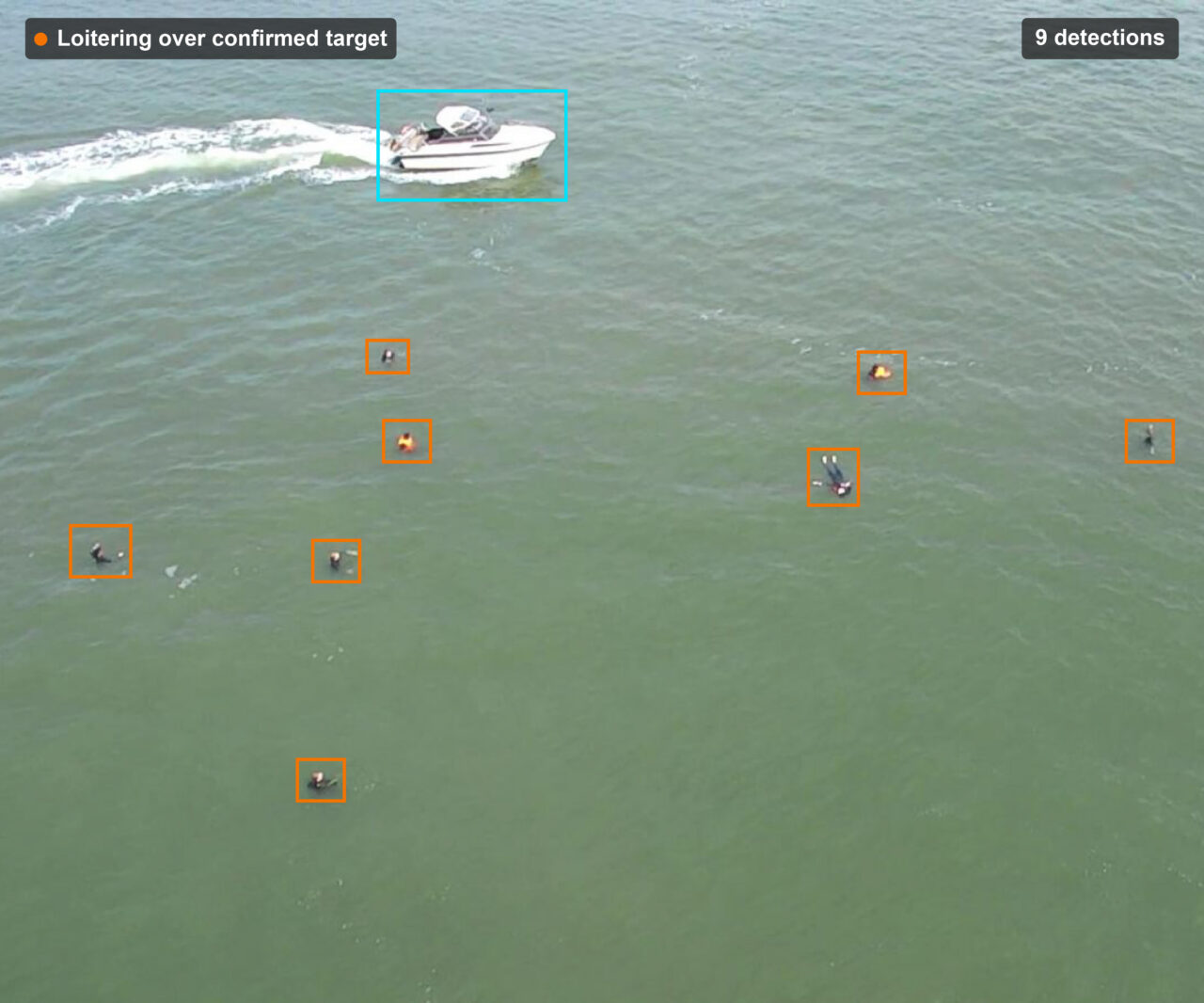
Computer vision analyzes every frame. Each object gets a class, a confidence score, and a track. This ensures the same swimmer doesn’t raise multiple alerts.
2 of 5
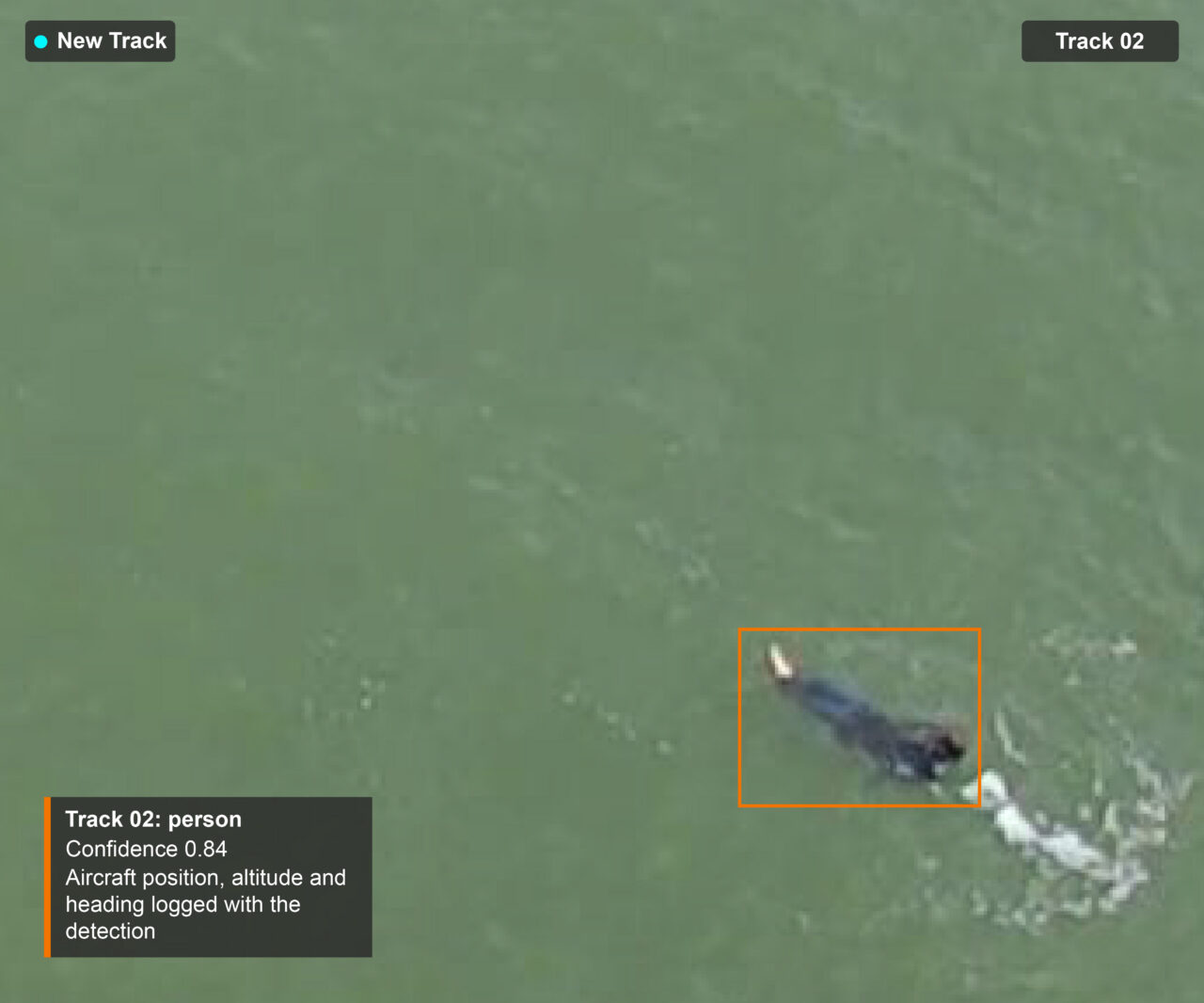
Locate
The detection is tied to the aircraft’s position, altitude and heading at that moment, and logged with the mission.
3 of 5
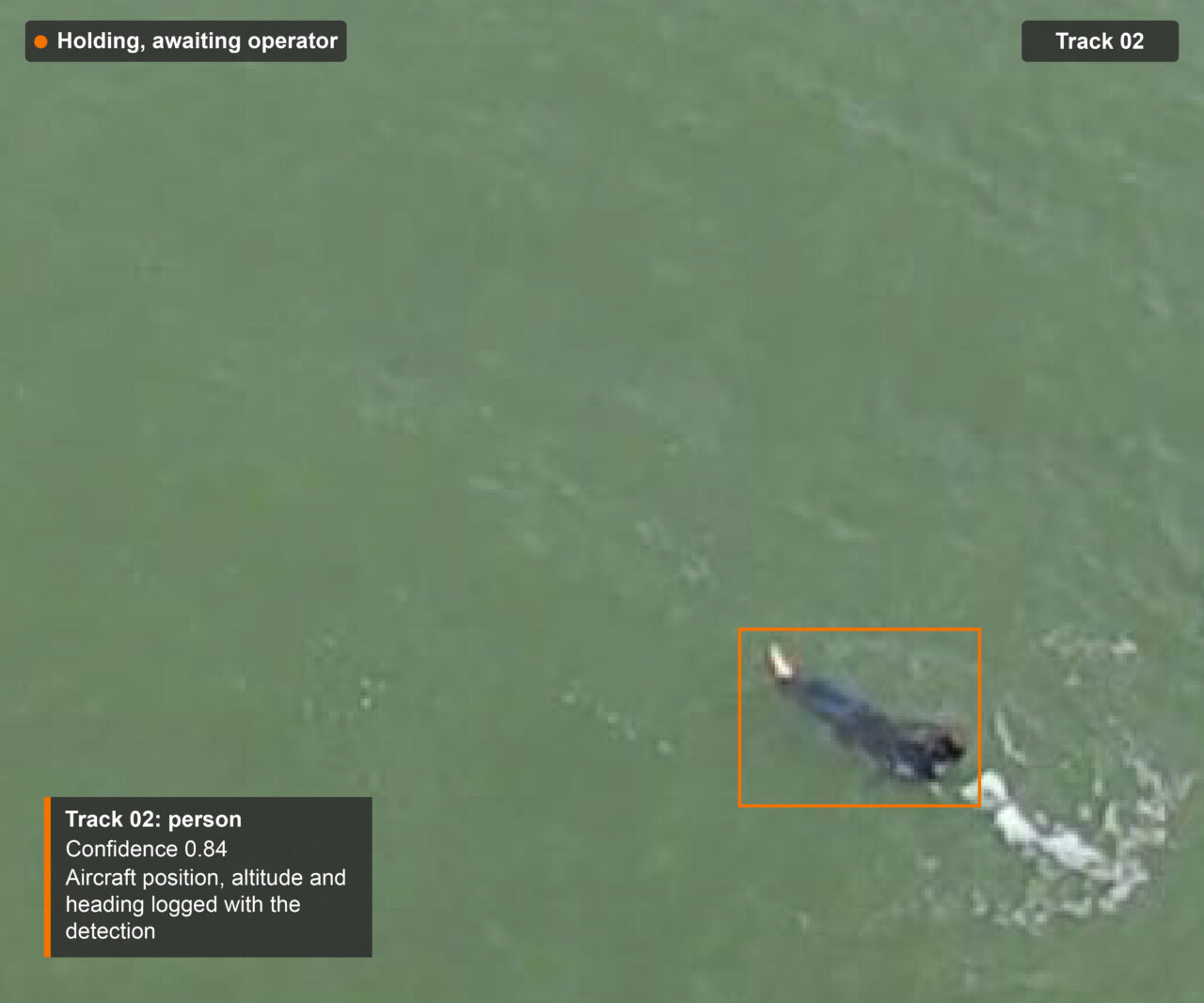
Alert
A new track automatically puts the aircraft into a hold over the spot where the detection occurred. The operator gets one actionable alert to validate.
4 of 5
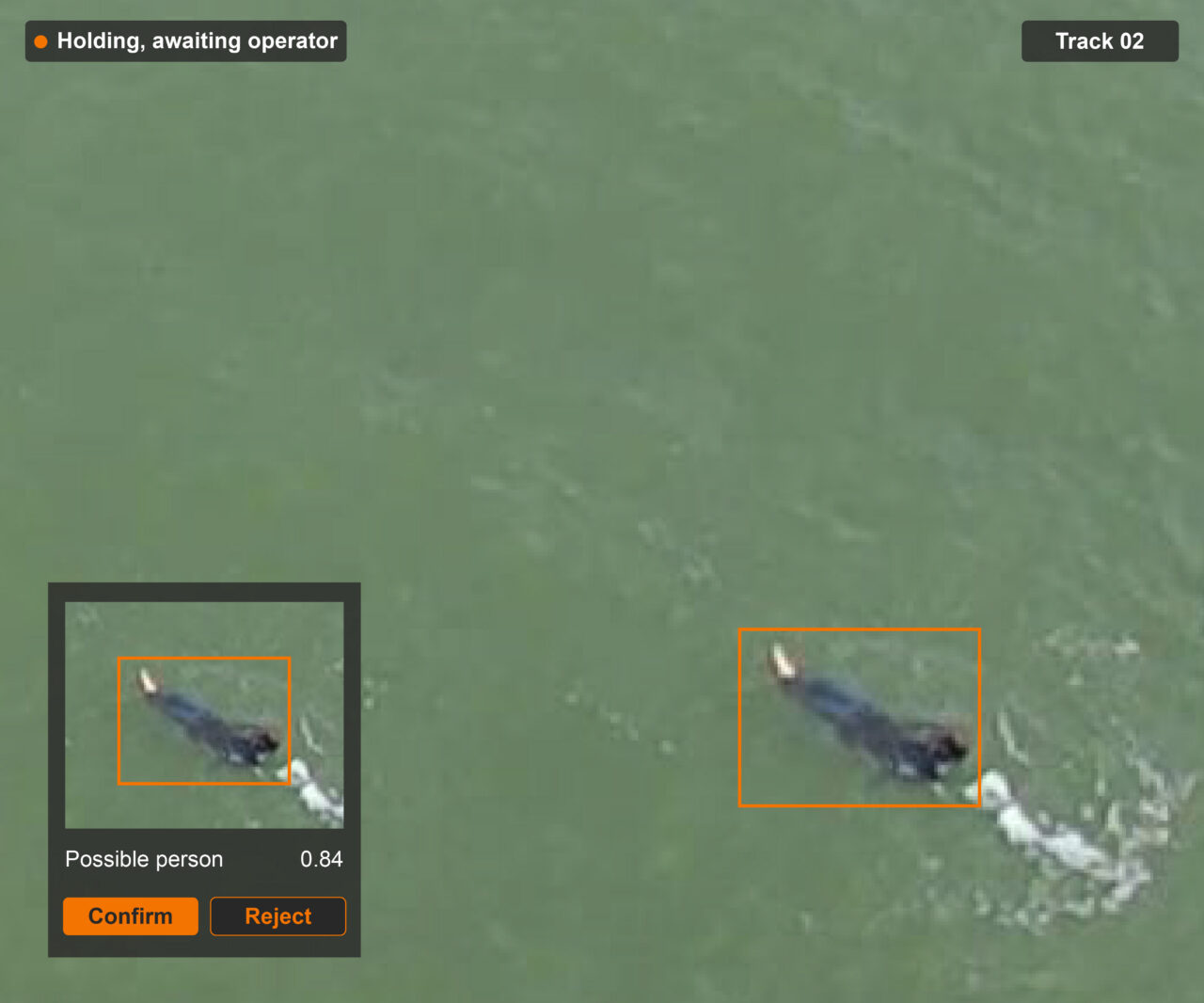
Validate
The operator is provided the image, the confidence and the position. This allows the operator to confirm or reject the detection.
5 of 5
Continue
Confirmed: the aircraft loiters over the target and marks it for responders. Rejected: it resumes the search where it left off. The rejection is logged to improve the model.
Drift-corrected patternPattern left at last known positionPredicted drift
Water moves. The search does too.
ALFRED’s planner predicts where the target has drifted using IAMSAR leeway coefficients for the target type, wind, and current. The flight pattern is then implemented around the predicted position instead of the last known one. In addition, the planner also checks battery endurance, coverage, and weather before launch. It generates coordinated patterns for multiple aircraft should more than one aircraft be utilized.
The camera is the sensor. ALFRED is the software.
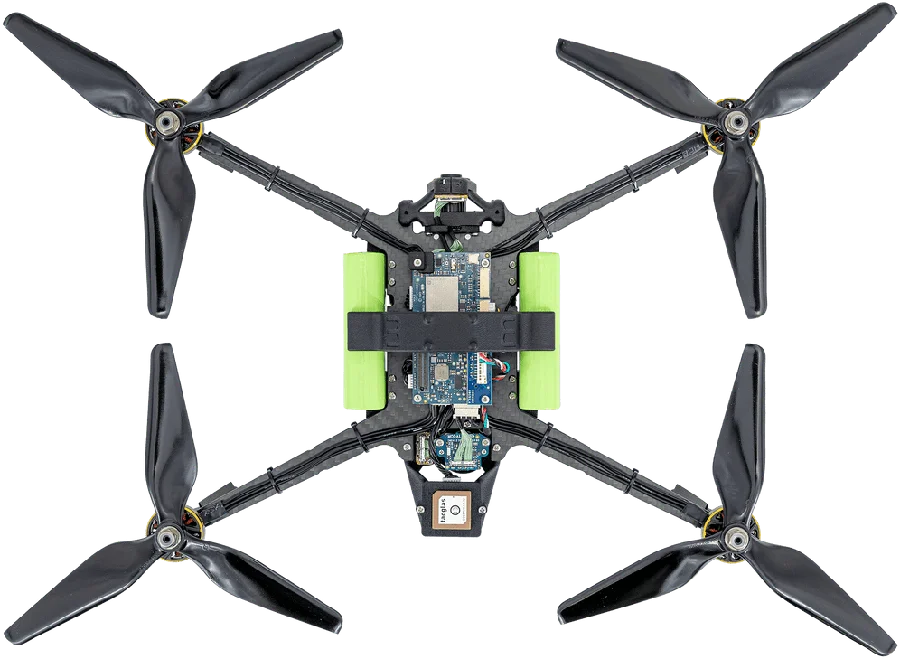
The first implementation flies on a ModalAI Starling 2 Max running PX4. Altitude, speed, and autonomous flight make a small drone a strong search platform, but the capability lives in the software and not the airframe.
ALFRED talks to the aircraft over MAVLink and takes a standard video stream. That’s what makes other platforms and fixed cameras a realistic next step rather than a rewrite. Operators can pair it with the aircraft and sensors that suit their environment instead of adopting a proprietary drone.
Built for search and rescue. Designed for more.
The same search, perceive, classify, locate and alert loop works for any object the model is trained to find. The model can also be loaded to any device that has a video feed.
Life rafts and survival equipment
Rafts, floatation devices and life rings. Class already in the trained model.
Vessels in Distress
Capsized, disabled or burning vessels. Boat class already in the trained model.
Debris and Wreckage
Floating debris that shows responders what happened and where to look. Class already in the trained model.
Maritime Domain Awareness
Models retrained to detect, classify and report vessels or other objects of interest.
Bring us the mission.
PMAT is looking for maritime operators, platform manufacturers, sensor providers and Government organizations to experiement with, integrate, and validate ALFRED. If you’d like to know more please contact us at the button below and one of our engineers will reach out with any answers you might have.