
Why Edge Architectures Fail in Real Operations
It’s not a lack of Data.
It’s the inability to move, fuse, and act on it in time.
PMAT delivers fusion, distribution, and decision support to the warfighter. We help solve real data flow challenges in fleet and expeditionary environments.
Integrated Mission Software
Our solution offers a range of configurations to meet diverse operational needs. The core component is the single domain management packs, which can be deployed in various form factors. These include the Data Center Tactical Edge Node for maximum processing power, the Compact Tactical Edge Node for smaller installations with space constraints, the Mobile Tactical Edge Node for applications requiring portability, and the Portable Tactical Edge Node for maximum mobility. The system can be enhanced with a cross domain solution for multi-domain connectivity and a dedicated Remote Operator Position. Additional options encompass network connectivity modules, software packages like ThreadLink and vMDLP, and infrastructure components such as racks, shock mounts, and transit cases. This modular approach allows for customization to suit specific operational requirements, from highpowered data centers to person-portable solutions. PMAT’s Tactical Edge Nodes are designed to host and integrate with mission-proven software systems already used across the fleet and joint force.
SWaP Reduction
Our solution allows the TEN to be accessible via “remote desktop” from any network connection. Racks can be replaced with a transportable system. Light configuration can be carried by two persons on a commercial aircraft. Lower power requirements. This reduces Size, Weight, and Power (SWaP) across our solutions.
Reduced Cost
Fits in current rack infrastructure. Removes fabrication requirements for installations – no welding and no additional fixtures or fabrication requirements. Unit costs are comparable to current TENs that are available.
Scalable
Can be adjusted depending on site requirements. Our modular capability allows comprehensive support across multiple clients and their mission-critical systems.
Depending on mission need, TEN configurations can support:
- Minotaur for ISR data ingestion, track management, and dissemination
- REACH Edge for distribtued data access and edge-enabled workflows
- Global Lightning Reach Edge (GLRE) for cross-platform targeting and data sharing
- PMAT-developed capabilities for data correlation, fusion, and decision support
- Additional government and mission partner applications as required
This approach ensures that capability delivered at the edge is not standalone. This capability is integrated with existing mission systems, workflows, and data sources while enabling more advanced correlation and decision-making at the point of need.
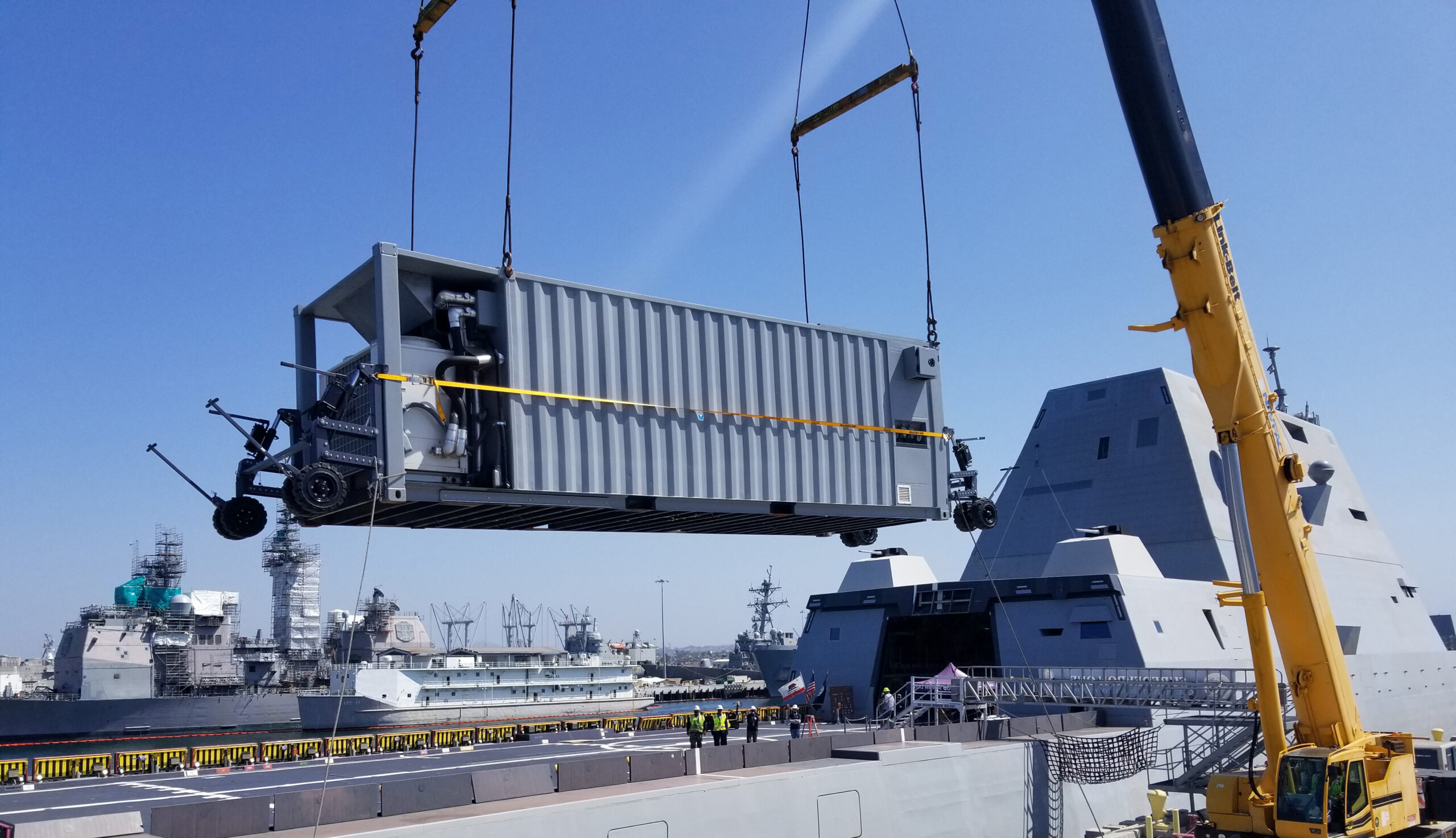
Our Tactical Edge Node Configurations
Small Form Factor
Lightweight, mobile capability enabling distributed and forward-deployed operations.
Shipboard / CVN
Designed for carrier and large-deck environments supporting multi-source fusion and watchfloor operations.
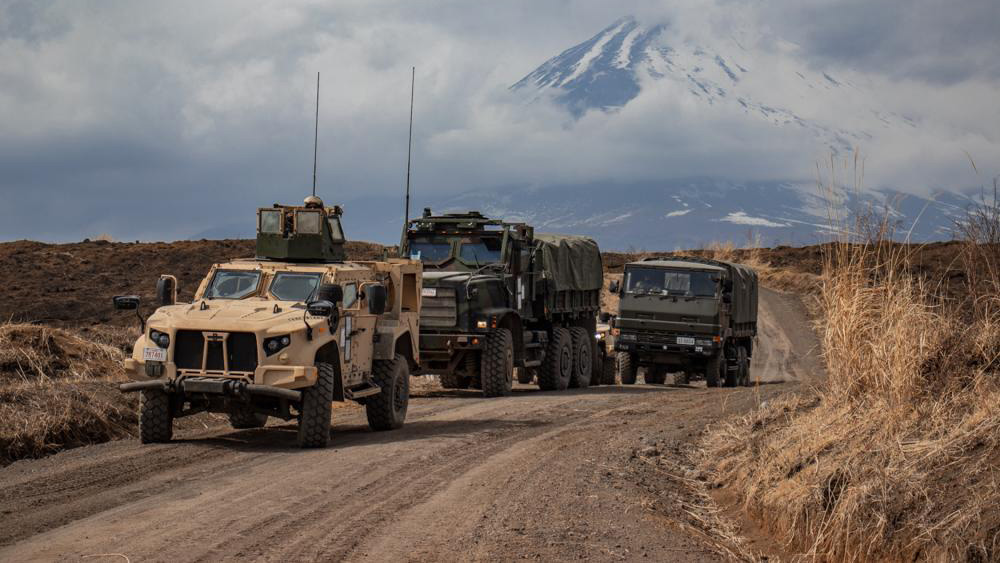
Expeditionary
Deployable with United States Marine Corps and joint forces, optimized for austere and bandwidth-constrained environments.
OPs Center / watchfloor
Supports command centers requiring fused data visualization and coordination.
Data Center |
Compact |
Mobile |
Micro |
|
Style |
OEM Equipment | Compact Servers (EL-8000) |
Large Laptop (Ruggedized Laptop) |
Micro-Server |
Weight |
1 or more Racks | 38 lbs | 13 lbs | 5 lbs |
Tracks / Hr |
10-20,000 | 10-20,000 | 10-20,000 | 10-20,000 |
Cross Domain |
Yes | Yes | No (Optional) | No (Optional) |
Ruggedized |
No | Yes | Yes | Yes |
Mobility |
Limited | Deployable | Rapid Deployment | Carryable |
Power |
800-3200W | 1500W | 240W | 100W |
MMS Capability |
4 Operators / Enclave | 4 Operators / Enclave | 3 Operators / Enclave | 1 Operator / Enclave |
What’s Happening in Other TEN Environments?
Current Tactical Edge Node (TEN) setups often struggle with a range of operational and technical challenges that limit their effectiveness in dynamic and contested environments. Many systems are built on legacy infrastructure that lacks the modularity and scalability needed for rapid software updates or integration of emerging capabilities. Bandwidth constraints and intermittent connectivity create significant barriers to real-time data sharing, situational awareness, and mission coordination—especially when nodes are operating in disconnected, degraded, or denied (D3) conditions. Additionally, many TEN architectures rely on proprietary or stove-piped solutions, making interoperability across platforms and coalition partners difficult. These limitations hinder the agility, survivability, and effectiveness of mission-critical operations at the tactical edge. Despite increased investment in sensors and collection, teams at the edge continue to face:
- Data arriving too late to act on
- Multiple systems that don’t share information effectively
- Bandwidth constraints that limit what can be moved
- Analysts stitching together incomplete pictures under time pressure
Want to Learn More?
Click the button below to send a message to our Subject Matter Experts. We’re more than happy to help answer any and all questions you may have.